


A few things have not changed in the age of AI, where the LLM has replaced 3/4 of the brain power of a whole generation of engineers who once found their meaning in the code they wrote. I mean, I hate to say it’s true, but a lot of folk should have been finding their meaning in the code they decided NOT to write. It’s the classic mix-up of smart engineers and developers thinking that their “use” or “importance” to a company or product was the amount and cleverness of the code they put out. They worshipped at the feet of their own fingers, enamored with staring at themselves in the mirror, convincing themselves they were smarter and could write better code than those around them.


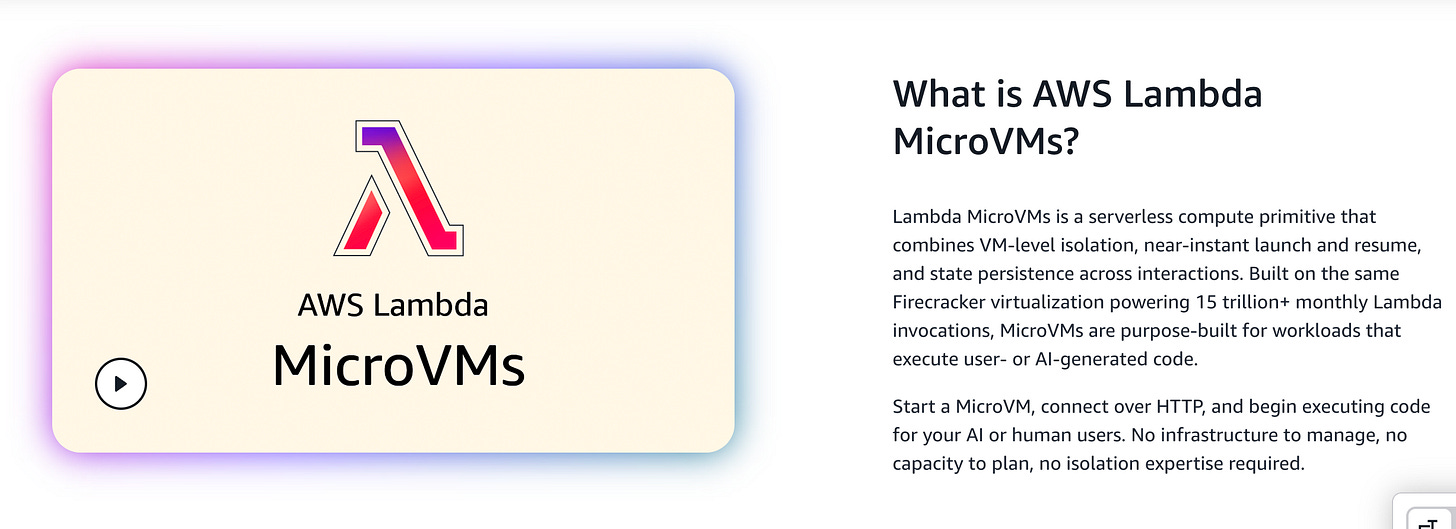
When AWS announced Lambda MicroVMs, I was genuinely excited. After years of incremental services and endless feature releases, it finally looked like AWS had built something that filled the awkward gap between Lambda and EC2. On paper, it sounded perfect. You get VM-level isolation, more memory, persistent state, and startup times measured in milliseconds, all without managing infrastructure. If you’ve ever wished Lambda had fewer limitations or EC2 required less babysitting, this looked like the answer.
Then I actually built something with it. Needless to say, I felt betrayed, lied to, and taken for a ride. Not a happy camper am I.

Why isn’t anyone talking about this?
Sometimes I am genuinely amazed by what captures the attention of the broader data community and what gets quietly pushed off to the side. I suppose I understand why it happens. New models arrive, vendors announce shiny features, and everyone rushes toward the next big thing. Still, as someone who has spent the last few years championing what I affectionately call the Single Node Rebellion, it is difficult not to wonder why certain developments receive so little attention. This is one of those moments.