

The Age of Agentic AI | LangChain and LangGraph style.
It’s a fast-paced and ever-changing world we live in; nothing we can do about it. I grew up in the middle of the prairie, when the internet became mainstream, the age of Doom, Myst, MSN Messenger, Yahoo Pool, and that irreplaceable Goldeneye, let’s be honest, World of Warcraft on a PC was game-changing. I suppose you could chalk up half my feelings as nostalgia and old-person hum-drum, I won’t deny it.
I see the current Agentic AI confusion in the software community as something similar to the old days when I split my time between being a river rat and playing Battlefield 1942 all night long, enraptured by new tech, yet drawn to the old ways.
I cut my teeth on the LAMP stack and was well-versed in the CGI-bin of Perl, a long-forgotten technology. There is a tendency to chalk up current trends in AI, both as a code generator and as a problem solver, as either …
- total crap
- the end of the world
- the only way to operate
It’s neither; it’s just the start of a new world. The hand-waving programmers of yore who chalk up AI in software as a fad or heresy will no doubt be ok in the years to come, yet slowly start to drift off into ignominy, relics of a time gone by. The young and restless who think software engineering will no longer be a thing simply have not been programming at all, or very long: software (generated by anyone or anything) = bugs and nuance. Humans capable of sniffing out nuance and where to apply simplicity will always have a hand in the game for the foreseeable future.
My poor heart aches for the young and restless, that infamous junior developer who thought it was a good idea to swallow whole that glut of digital rot poured forth from Cursor. The piper will eventually come calling.
Look, when Henry Ford pushed the first Model-T off that assembly line, and the iron horse chugged down that track, the smartest cowboy went ahead and learned how to change the oil in that Model-T, or how to shovel coal into that boiler. It wasn’t the end of the world for them; it was the exciting beginning of a new world, and they had the chance to be right there with it.
Be like the old programmer cowboy who can learn new tricks. When the gold rush happens (AI or otherwise), but the person selling picks and shovels. Be the programmer who knows HOW to build Agents, and generally work with and serve LLMs.
Learning “Agentic AI via LangChain/Graph.”
Probably one of the easiest ways to take the scaries out of the AI and Agentic AI, that you hear all the script kitties on LinkedIn blabbing about, is to simply build a little something something, ya know what I mean?? For the most part, it ain’t rocket science, if a cornfed boy can do it, so can you.
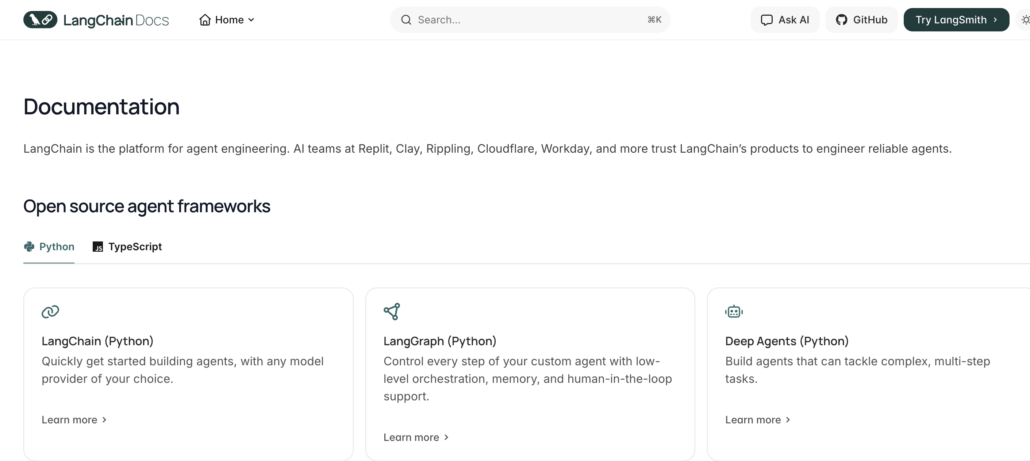
To make it real simple for ya, for the most part, the average AI/LLM/Agent you might deal with is going to be made up of a few different “things.”
- LLM model (say Ollama, Anthropic, etc)
- Hosting for model and/or SaaS endpoint
- Python (most likely) framework (like LangChain)
- Application
- hosting (web usually)
- serving
- frontend
- core logic (backend)
- Data (optional)
- RAG, Vector, etc.
Who would have thought that the folk being undone by AI have to build systems to make the AI? Wait. What comes first, the chicken or the egg? One must not forget that at the end of the day, these “AI” systems are software systems in themselves, multiple pieces of technology that work together to produce some outcome.
Most of building “AI” or “Agents” is less about programming and more about building systems. Frameworks like LangChain have made the LLM part, and even the Agent part of the process so seamless that it isn’t tricky to build POCs, but instead… how do we host and serve this agent in a production environment?
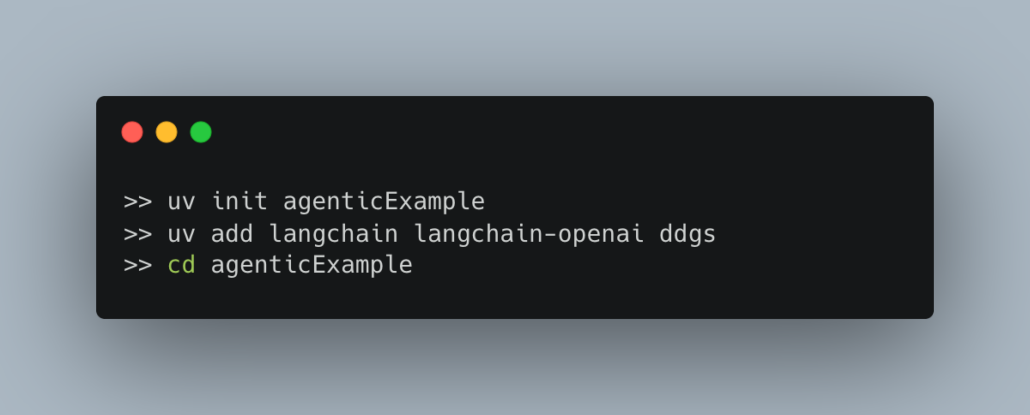
Little UV commands.
Let’s say your CEO sends you a message on Slack saying they want you to build them a “Financial Market Agent” to help them get the TDLR from the market every single day, without having to do any reading themselves. You have to do it, and if you fail, you will be removed and placed on the SQL Server DBA team, doomed to troubleshoot deadlocks for the next 15 years.
So what next?
Easy. Little LangChain + OpenAI and maybe about ~30 lines of Python code stand between you and AI glory.
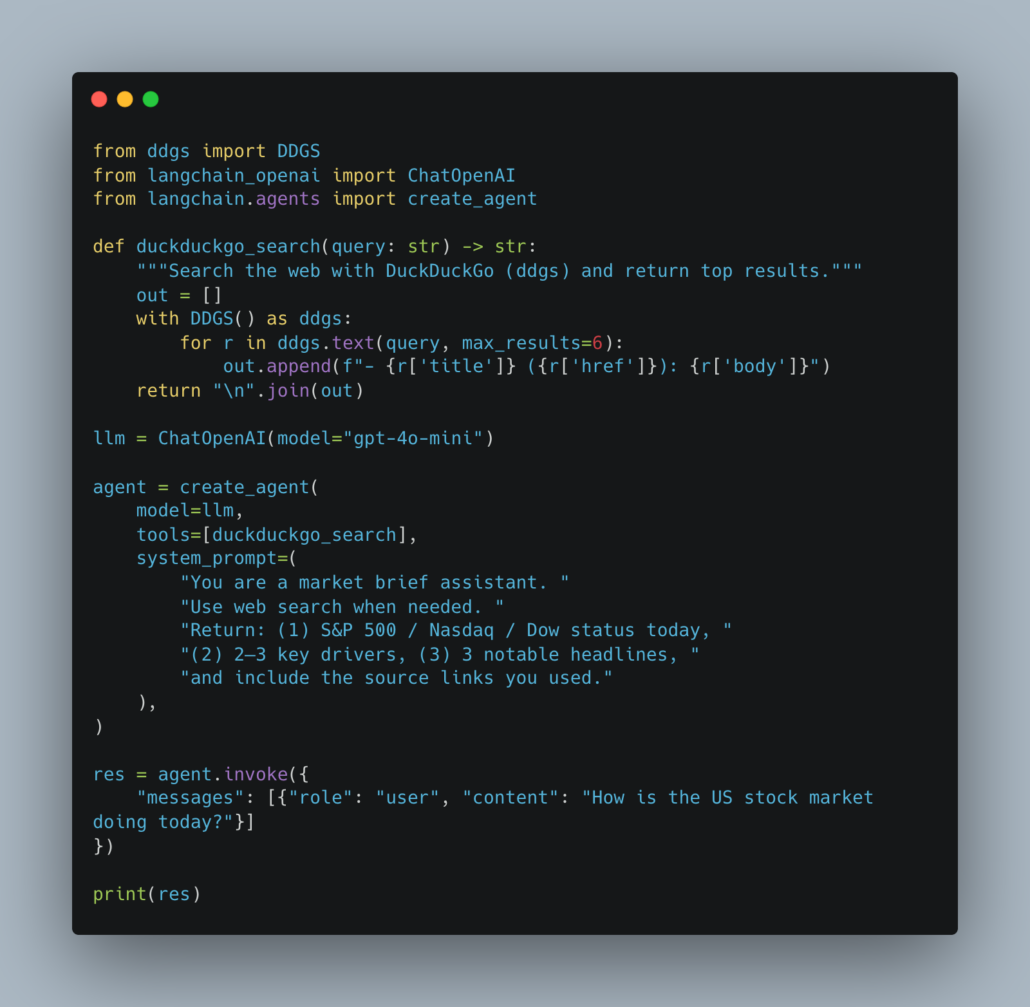
And the results … somewhat truncated. Basically, the web search happens, results are brought back, and the LLM goes ahead and summarizes it all for that nasty CEO.
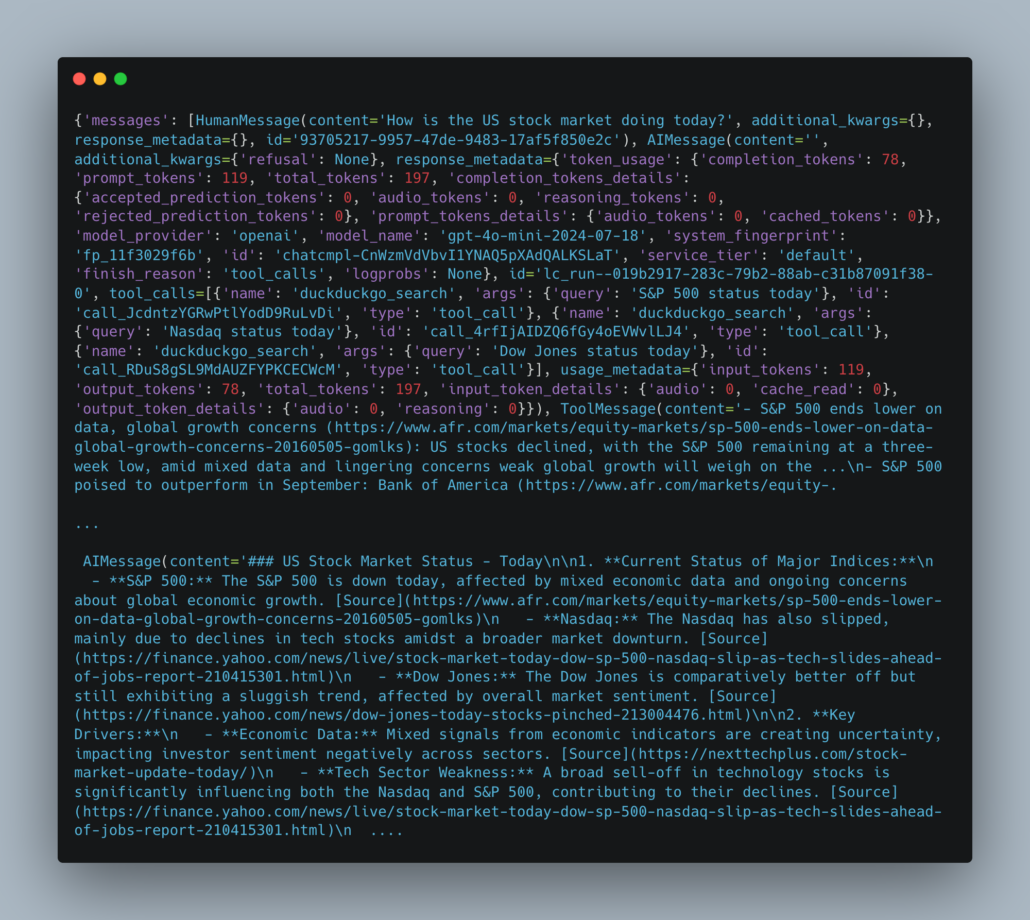
Well, that was easy. Kinda. Yeah, 30 lines of Python code and an OpenAI key later, you have a working prototype, but truth be told, that is only a small part of the battle. Why?
Most likely, your CEO isn’t well-versed in the command line. You actually have to build something that both consumes and interacts with the end user.
You have frontend work to do, web server and hosting to figure out, security, performance, backend work around how to serve this code and/or app and/or service. You know, like the same stuff we’ve been doing forever. But at the same time, you can see that building Agentic systems isn’t THAT big a deal.
Heck, you could keep adding more agents to our toy example to do other things with LangGraph, add a human in the loop, etc, etc. But these are solved problems; different people have done the hard work and given you frameworks like LangChain. The more challenging part is actually bringing such systems to production.
- build
- buy
Of course, with this new gold rush of AI and Agents, there are a million companies now offering to do the hard part of hosting the Agents for you, serving them via whatever means you want, etc. Just like with other software… build vs. buy. Maybe it’s one or the other, maybe a little of both, the world is at your feet, you choose.
Bring AI back down to earth.
This is neither the first nor the last time I have talked about this topic, and I will keep doing it. I see a lot of conversations about using AI to build software, with it either good or bad, up or down. It’s better to shift the conversation to a higher level, making it more productive and realistic.
Most software developers should learn how to build the pick and shovel makers during the gold rush.
Don’t worry about what AI will do to your job; no one knows the future, and the future is probably something none of us imagines. But instead, you should be pragmatic in your approach to AI and Agentic AI, and embrace it at a fundamental level. LEARN it. Learn how it is used.
- Learn what MCP is
- Learn what RAG is
- Learn what vector databases are
- Learn what frameworks are commonly used in LLM models
- Learn how AI infrastructure is built and what tools are used
Just learn a new thing, just like the last time you learn something new. Doing this will most likely put you in the top 10% of software engineers around you. Be a learner and a doer, always. With that sort of mindset in place, your place will be secure.

